Sunday, May 3, 2009

Rain pants rule changes for May

Dear Families,

       Now that May has come, the official policy is that teachers decide if rain pants are required each day.  Because in the nursery many children come to school dressed in outside clothes, and because I want to free nursery children from a crowded and busy hallway as much as possible, I am going to trust parents to decide whether rain pants are needed or not.  If you need some sort of guidance or rule to help each morning, one you might decide the following way

1)  If it has rained the night before or is raining in the morning, use rain pants.
2)  If it has been dry and warm the day before and is still, no rain pants.

Kindergarten teachers have been asking for sun hats.  Because the nursery children are outside earlier and in the woods a great deal (so there is both a lot of shade and chances for sun hats to get lost), they are less essential for this year's nursery class, but do plan on procuring one for kindergarten in the fall.

With rain and sun,

William Dolde

Friday, May 1, 2009

Preview of Newsletter, Brief Summary of Meeting

Dear Families,

Expect a newsletter later next week. Here are three topics I will write about, which we touched upon in the meeting.

1) Thoughts about media and young children.
2) Thoughts about fairy tales and young children.
3) Thoughts about gender roles, stereotypes, and young children.

For topic 1, I told parts of stories, read from a book, and showed a disturbing clip from The Lion King in which Mustafa is trampled to death. While some parents expressed appreciation for an experiental process, and while this experience is one I learned to share years ago and have done so because it does help start a discussion, I want to make sure, when I write you again, that I am not leaving parents with the idea that tv or dvds are OK as long as they are not as graphic, pumped up, and stress-producing as this scene from the Lion King. Indeed, from the Disney repertoire, I have as much concern about the way young women are portrayed and the messages this sends to young girls and boys--and over the years, the greatest challenges media exposure has brought to our nursery class has not so much been boys pretending to trample a lion king to death but rather quiet conversation among girls about whether one is pretty or not, or enough like Ariel or Jasmine (from the movies), or whether one can follow the exact script from Little Mermaid or Aladdin or The Incredibles (I have also had problems with boys excluding others because others did not know the exact script of this or that movie).

Topic 2 provoked a lively discussion because (perhaps moreso to adults, perhaps not) "The Wolf and the Seven Little Kids" is a compact and intense tale. Parents were open and free in sharing their opinions about fairy tales in general and whether this particular tale was the right thing for their child at this moment. From that discussion, I feel I owe you a well wrought article (hopefully by someone else, but perhaps me) about the place of fairy tale--and of coming to term with darkness--in relationship to child development and Waldorf education. It is definitely possible for me or other writers to be dogmatic--vaguely remembering that Rudolf Steiner and Albert Einstein championed fairy tales for young children so any fairy tale is good at any age--so I will only share an article if I think it just right.

We had some discussion about the language of "The Wolf and the Seven Little Kids" and whether would change a word such as "monster" to "wolf." While remembering that these tales are translations from the German of the work of the Brothers Grimm, who edited told tales to make them more more in sync with the emerging ideologies of the day, I talked about the benefit for young children in a classroom setting of having the teacher know the story so well that she or he is able to be consistent in telling the text. We also discussed--and parents had a wide range of views--about considerations of editing a story or book as we tell or read it to our children. Over the years, I have found it best for me to show no fear of the words and say them ("monster," "death," "hatred," and soforth)--better for me to save the book or story until a child's older if I feel I have to edit it (there are, of course, exceptions, being surprised by a library book or book somebody hands you that you are reading with a child and have not had a chance to preview). I respect parents making their own decisions. We are always trying to artfully trying to find the balance between protection and the benefit of learning through trial, and different children and families find themselves at different points on this balance.

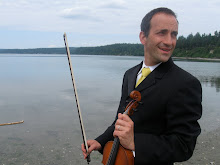
A problem with meetings based on experience is that they don't share every experience that is part of the class, or Waldorf education, or life. The meeting will have failed miserably if years from now parents remember their child's nursery class--"Oh yes, that was the class where what's-his-name told scary stories all year"--because I was unable to also present the many puppet shows I have presented throughout the year. As such, I invite you to come hear me tell a story I put together with folk themes from several stories at Mayfaire. I will be telling "The Fiddler and the Fairies" at 1 and at 2:15pm in the Sunflower Room (families are gathering outside first). This is not a story I memorized from text but one I composed myself, and I specifically try to prepare it without a written text (I am not telling it over and over in a classroom setting, so changes from telling to telling are not as disturbing). It tends to be more silly than scary (though the fiddler is abducted by fairies because they like his music so much, so listeners in a culture at a time when this abduction seemed imminent and manifest would likely be more on the edge of their seat), and some of the musical jokes recognize that parents and children will listen together, and the jokes are more for the parents.

About topic 3, I talked a little bit about Jack Zipes, and my revulsion towards "Little Red Cap" or "Little Red Riding Hood" as put forth by Perrault, Brothers Grimm, Golden Books, and onward. I talked about a more ancient version of the tale in which the girl helps herself. I will try to produce this version for the newsletter.

With warmth and light,

William Geoffrey Dolde

Monday, April 27, 2009

Watching Maypole tomorrow, meeting follow-up to come

Dear Families,

An early childhood newsletter will come out next week, and I will include an approximate summary of yesterday's meeting along with some follow-up texts (I hope to publish Jack Zipes' ancient version of "Red Riding Hood" in which the young girl saves herself). It came to my attention that parents were not able to download "Fielding Children's Dreams" from Whole Child/Whole Parent. I gave printed copies to parents present at the meeting and will put a copy in your folder if you were not present. If you were able to download or view "Fielding Children's Dreams," please let me know.

As you may have observed, the big Maypole stands near our classroom, ready for Sunday's Mayfaire from 11am to 3pm. On this Tuesday, from 11:45 to 12:30pm, our nursery class will watch the elementary grades practice for Mayfaire. We will give our children the option of watching from inside or outside (William outside, Kim inside, for example). This will be instead of our rest and fairy tale (with the festivities, music, and dancing outside our window, it would be unwise for me to try to present our quiet end of the morning in the usual way). As such, please look for your child outside first as you come to pick up tomorrow.

With warmth and light,

William Geoffrey Dolde

Sunday, April 26, 2009

Reminder -- Meeting Today, Sunday

Dear Families,

       Please remember we will have a meeting today from 3 to 4:30pm.  If weather permits, we will begin outside near the classroom.  About half an hour into the meeting, we will walk up to the tower briefly.  I will help us conclude by 4:30pm. 

With warmth and light,

William Dolde

Monday, April 20, 2009

Soup, Clothes, Wolves, Dreams, Geese, Meeting

Soup We welcome soup vegetables on Monday and Tuesday. Children and I work on peeling and chopping the vegetables at the end of the morning on Tuesday. If Wednesday comes and you realize you have forgotten to bring a soup vegetable, please bring vegetables that you (or you and your child, ideally) have already chopped at home.

Winter Clothes Over break, boots and clothes and bags were lifted so that deep cleaning could occur. Please check to see that your child's clothes are on your child's hooks. If you feel confident frosty weather is behind us, consider bringing home some of your child's extra winter coats and snow pants (leaving rain gear at school, of course). My experience is that families that leave lots of extra clothes at school until June tend to lose some in the end of the year business.

The Wolf and the Seven Little Kids Our nursery children seemed ready for a told fairy tale (rather than puppet show) with more drama. While I observe plenty of cooperative play, I have also observed increasing interest in conflict and tension--play themes that involve taking and robbing (these themes are not limited to boys or girls), themes about death and rebirth. I have heard children say, "We can never die" or, "Teacher, if you kill us real, we'll come back." The timed seems right for a well-wrought, artistic gift that presents images of life, death, and reincarnation and helps feed the interest of the children with a narrative that engages with these themes while also providing light and warmth. "The Wolf and the Seven Little Kids" is just such a story from the Grimms' collection. It is often a favorite first story of the sort that has more tangible forms of darkness and evil (teachers generally delay stories such as Cinderella or Hansel and Gretel until children are 6 or 7; "The Wolf and the Seven Little Kids" has been told to fascinated and delighted children many times in many Waldorf schools and elsewhere).
Here is an on-line version of the story, very similar to what I tell. I offer this not with the recommendation that you read this to your child at home, but so that you can be aware in case your child talks about any of these themes at home. I was blessed to be able to have Nancy Mellon (author of Storytelling With Children and a teacher of storytellers) observe me tell this story to a kindergarten class years ago, and many of the nuances I use (or choose not to use) come from Nancy's discussion with me afterwards. I plan to tell this story at our meeting Sunday and will relate some of what Nancy discussed with me.
Here are some words towards interpretation of the story from Rudolf Meyer from The Wisdom of Fairy Tales.

Dreams While young children have loved the story, the wolf, nonetheless, can be scary. He does swallow six of the seven children. The wolf does die at the end of the story. While I gave due consideration and concluded that this story would have a positive effect on our class as a whole, and while I did discuss my decision with parents of younger children in the class, it is possible that a child could be upset by the story (although this has not occurred with me, I have heard of other nursery teachers observing that some of the youngest children become upset because the wolf drowns, not because he tricks the kids and swallows them). Nancy Mellon, in working with parents and children, recommends drawing with a child to help process what the child is experiencing. She also acts out this story with her kindergartens (I did this, too, as a kindergarten teacher; in the nursery, I try to avoid singling out the children by having them play this or that role; at the same time, I would not be surprised--I even hope--that children pick up plot elements from the story in their play).
I am offering a brief pdf selection here about responding to children's dreams from Whole Child/Whole Parent by Polly Berrien Berends. I find Berends' reflections in this selection helpful not only in responding to dreams and nightmares but also in responding to fears and challenges our children present. I recommend her book highly (and did so in several parent conferences); know that it is not a quick read; its strength, however, is in its meandering and meditative nature--it does not answer questions but helps us frame our questions in a new light.

Wild Goose Lake In a conference, I had a helpful conversation with a parent about fairy tales, gender roles, archetypes, needs for new archetypes, and the like. I recommended the fairy tale "Wild Goose Lake," in which two girls use music to gain a golden key to unlock a gate to provide water to their village. They have to free the water from the Dragon King, but he never appears in the story, and there are not the battles or deaths or marriage plots you might find in other tales. I have told this story to many kindergartens and nurseries (and may tell it to our class at the end of the year). Here is an on-line text for this tale. I would be glad to talk about this tale, gender roles, archetypes, and stereotypes during our meeting on Sunday.

Meeting, Sunday, 3 to 4:30pm On Sunday, I will tell "The Wolf and the Seven Little Kids," read a book, and present one or two other experiences (not necessarily pleasant). These then will allow us to discuss a variety of topics (really based on the interest of the parents present) including but not limited to, media and violence in the media, looking ahead in the Waldorf school and discussing reasonable expectations for playdates and movies and the like, fairy tales and gender roles and stereotypes and archetypes (I am a big fan of Jack Zipes, and you may find me somewhat flexible), and more. I am not attached to where the discussion goes; I feel very prepared to talk about or help talk about these topics, but I want to avoid making the meeting a lecture.

Sunday, April 19, 2009

rain pants rule still obtains

Dear Families,

       Even as we celebrate the warm weather this weekend, remember that we (stubborn as it may seem) will persist in asking that children come dressed with rain pants and boots through May Day (and then as weather requires after that).  The glorious 65 degree weather does not arrive at 8:30am, and children in the woods find damp and muddy places. 

      If it warms quickly, I will allow children to take off rain pants after our walk.  Please, however, dress your child in rain pants to start the morning.  Do check at home or school to see that your weather gear is appropriate for the warmer, spring weather.  Snow bibs could be more than a bit uncomfortable.

       Expect more soon about our fairy tale, "The Wolf and the Seven Little Kids," and our parent meeting next Sunday afternoon.

With warmth and light and preparedness for dampness,

William Geoffrey Dolde

Friday, April 17, 2009

Maxwelton Beach this afternoon

Dear Families,

        Remember that you are all invited to join my family at Maxwelton beach this afternoon (Friday, April 17) from 4 to 6pm.  I offer this as a chance to ease the transition back to school next week.  Although this is not a pot-luck, if the weather should improve, you might consider bringing a picnic.  If the present rain transforms to cold, windy rain, we will have some slushy play and may leave earlier than 6pm to dry off for dinner at home.

     Expect to receive more posts soon about a fairy tale I'll be telling during school and our nursery parent meeting next Sunday, April 26, from 3 to 4:30pm.

With warmth and light,

William Geoffrey Dolde